"I bleed too" - Inclusive Menstrual health and hygiene
.jpg/:/cr=t:5.56%25,l:0%25,w:100%25,h:88.89%25/rs=w:1209,h:605,cg:true)
11,824,355 women with disabilities in India experience menstruation — so why is this reality still met with silence?
Menstruation remains deeply stigmatized, and for girls and young women with disabilities, the barriers are even greater.
Many are left entirely dependent on caregivers for menstrual care, restricting their autonomy, dignity, and full participation in life. What would change if we truly listened, learned, and acted?
Through "I BLEED TOO"Initiative, we are asking these questions and driving solutions — combining community-led research, caregiver training, accessible education tools, and advocacy. We work with families, schools, and health systems to build awareness and support independent menstrual care — because inclusive menstrual health is a right, not an option.
Background
Menstruation continues to be a taboo subject in many Indian communities, despite ongoing efforts by government bodies and non-governmental organizations to promote menstrual health and hygiene management (MHHM). Women and girls often face numerous challenges during their menstrual cycle, including physical discomfort, emotional changes, and heavy bleeding. These challenges become significantly more complex for individuals with disabilities, for whom understanding and managing menstruation can be particularly difficult.
In such cases, caregivers typically take on the full responsibility of menstrual care. However, it is critical to empower adolescent girls and young women with disabilities to independently manage their menstrual hygiene. This includes learning how to use sanitary products, manage symptoms, and properly dispose of menstrual waste. Raising awareness among caregivers and training them to support this independence is an essential step toward inclusive menstrual health education.
Our efforts
Community Needs Research
Community Needs Research
Community Needs Research

Identifying menstrual health needs in partnership with caregivers, schools, and communities through research.
Advocacy
Community Needs Research
Community Needs Research
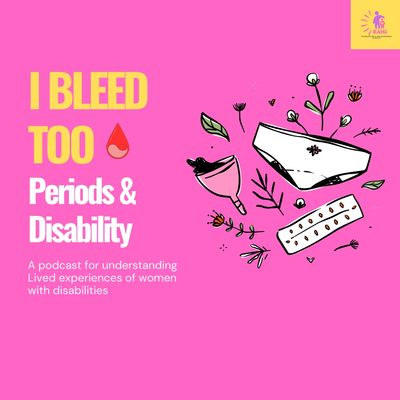
A podcast amplifying the lived menstrual experiences of women with disabilities, shifting silence into visibility.
Social Media Awareness
Community Needs Research
Social Media Awareness
Driving menstrual health visibility and inclusion through social media awareness campaigns.
IMHHM Toolkit
Training Workshops
Social Media Awareness
Designing an accessible menstrual health toolkit tailored to the Indian disability context—culturally relevant, caregiver-friendly, and rooted in lived realities.
Training Workshops
Training Workshops
Training Workshops
Conducting Training of Trainers (ToT) and caregiver workshops to build capacity, implement inclusive MHHM practices, and support independent menstrual care for girls and young women with disabilities.